
St. Clair County Arrest Records and Charges
St. Clair County arrest records document law-enforcement custody and booking. The Sheriff's roster can show a name, mugshot thumbnail, booking number, age, booking time, listed charges, and bond. Those are booking-level fields. After arrest, the prosecutor decides how charges proceed in court, and the Circuit Clerk keeps the formal case record. One arrest may produce several counts, and the filed counts can differ from the initial booking list.
The distinction matters. The St. Clair County inmate roster addresses custody and booking, while the court charge record tracks the filed accusation. The full case file later adds pleas, motions, hearings, disposition, and sentence. A charge can be amended, reduced, dismissed, or discontinued, so both the booking source and current court case must be checked.
Find St. Clair County Arrest Records
The St. Clair County Courthouse holds the court side of this record path through the Circuit Clerk, while the Sheriff's Office holds the booking and law-enforcement side.
Use the Sheriff's inmate roster for current, released, or archived booking information. Use Alacourt ACCESS for paid Circuit and District Court case reports. Alacourt supports name and case-number searches and can show court actions, status, setting dates, parties, financial history, and the case action summary. A $9.99 search charge applies even to no-match results.
- Check the sheriff roster for the arrest date, booking number, early charge labels, and bond.
- Open Alacourt and search the defendant's exact name or, preferably, the court case number.
- Match St. Clair County, the correct court, filing date, and defendant before opening the paid report.
- Read each count, its charging document, plea, current status, and disposition separately.
- Contact the Circuit Clerk for a certified or non-imaged court document.
For a sheriff record that is not on the roster, use the agency's formal request process. The Sheriff's public-records request page requires a specific existing record, Alabama residency certification, and proof of permanent residence.
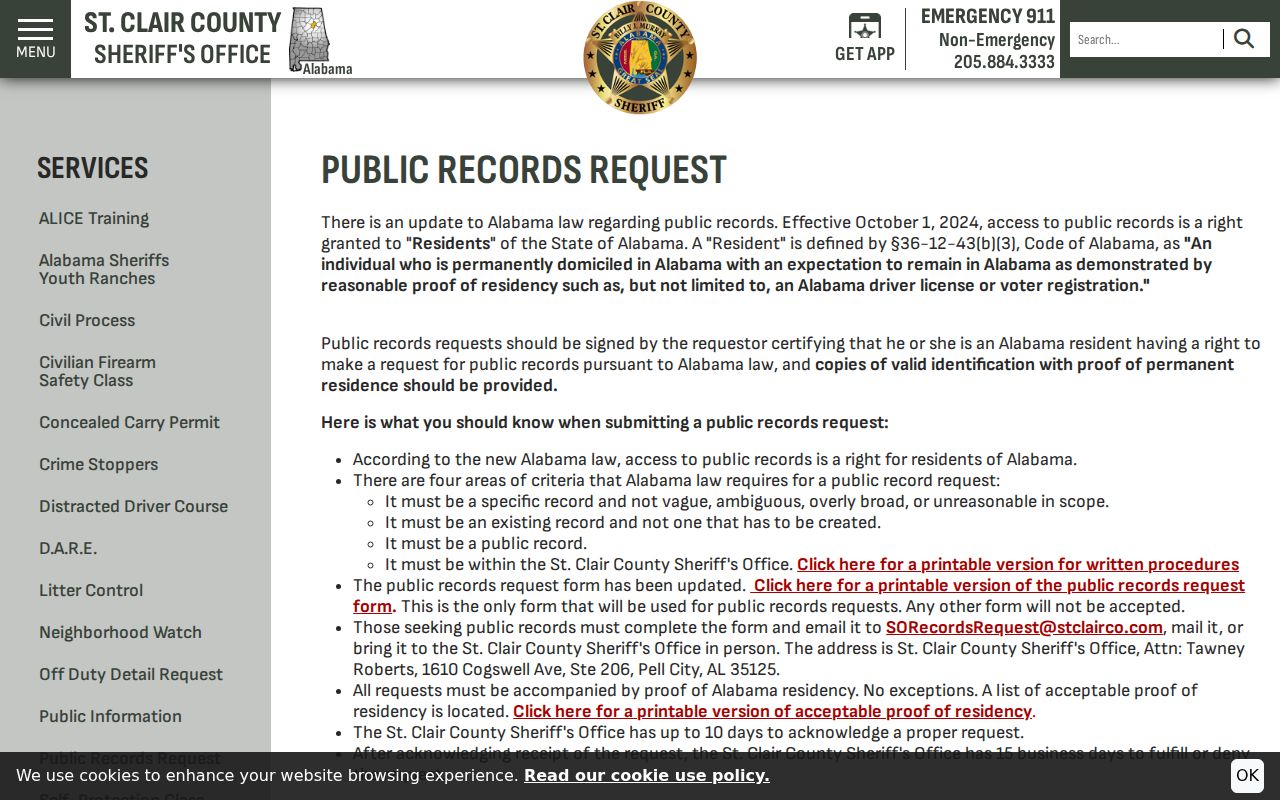
The request may be emailed, mailed, or delivered in person; payment should wait until the office states the amount.
A proper sheriff request can be sent to SORecordsRequest@stclairco.com or to St. Clair County Sheriff's Office, Attn: Tawney Roberts, 1610 Cogswell Avenue, Suite 206, Pell City, AL 35125. The office says it may take up to 10 days to acknowledge a proper request and 15 business days after acknowledgment to fulfill or deny it. Those rules apply to specific records in sheriff custody, not to Circuit Clerk court files.
The free “St. Clair County Sheriff's Office” mobile app is another access channel. Official sheriff releases say it includes the inmate roster, Most Wanted items, press releases, and special alerts. The same main tools are visible on the sheriff website, so the app should be treated as a mobile route rather than an exclusive arrest database. It does not replace Alacourt for formal charge status.
St. Clair County Charging Documents
A charging document moves an accusation into the court record. A complaint states an accusation and can start a case. An information is a formal document filed by a prosecutor in matters where that form is authorized. An indictment is a formal felony charge returned by a grand jury. The local jury page describes the grand jury as an 18-member body that decides whether evidence is sufficient to require the accused to stand trial.
| Complaint | Information | Indictment | |
|---|---|---|---|
| Source | Filed accusation used to begin a matter | Prosecutor | Grand jury |
| Function | States the alleged offense | States a formal prosecutor-filed charge where authorized | Formally charges a felony after grand-jury action |
| Record Check | Compare with later amendments | Read the filed count and status | Read each count and the later plea or disposition |
St. Clair County Court Charge Status
Charges can change as facts are reviewed and the case moves through court. The District Attorney may decide how to prosecute, present a felony matter to the grand jury, negotiate a plea, or discontinue a count. The judge enters rulings and the Circuit Clerk records the case activity. Read the original charge alongside the latest status and final disposition.
| Status | What It Means |
|---|---|
| Pending | The charge has not reached a final court outcome. |
| Amended | The filed accusation was changed; read the later count rather than relying on the first label. |
| Reduced | The prosecution proceeds on a less severe charge than an earlier accusation. |
| Dismissed | The charge ended without a conviction on that count. |
| Nolle Prosequi | The prosecution formally discontinued the charge. |
| Disposed | The charge has a recorded final outcome, which must be read for its exact result. |
St. Clair County Charges vs. Convictions
An arrest or formal charge is not a conviction. The prosecutor files an accusation; guilt requires a guilty plea or finding. A criminal case may contain charges that were dismissed, reduced, discontinued, or resolved by a not-guilty finding. The St. Clair County criminal court record supplies the later plea, disposition, and sentence.
| Charge | Conviction | |
|---|---|---|
| Stage | Accusation | Verdict or plea |
| Burden of Proof | Probable cause | Beyond reasonable doubt |
| Meaning | Formal accusation | Guilty plea or guilty finding |
| What to Read | Current count and status | Disposition and sentence |
St. Clair County Expunged Records
Sealed and expunged records do not belong in an ordinary public lookup. Alabama's expungement process is fact-specific. A petitioner generally needs correct arrest identifiers, charge details, disposition data, and required prosecutor or agency information before filing in the proper circuit court. If the order is granted, covered court and agency records are removed from ordinary public access. Expungement is not the same as a pardon.
- Sealed record
- Closed to ordinary public access by law or order. Access requires legal authority or court permission and depends on the governing rule.
- Expunged record
- A qualifying record removed from ordinary public access after a granted order. Eligibility and later access are controlled by Alabama law and the order.
St. Clair County Charge Severity
Each charge should be tied to its actual offense label and governing code as the court records it. Official research did not publish a St. Clair County case-number or charge-code format, so no local pattern should be guessed. One arrest can lead to several counts, and each count can have a different plea, status, and disposition.
The District Attorney is Lyle Harmon. The prosecution office is at 1815 Cogswell Avenue, Suite 221, Pell City, AL 35125, with phone 205-338-9429. Its Ashville mailing office is P.O. Box 40, Ashville, AL 35953, with phone 205-594-2180. The District Attorney decides how charges proceed and assists victims, but the office is not the custodian for certified court-case copies.
Bond data also spans more than one record. The roster may show the amount set at booking. Later court entries can reflect changes, hearings, or disposition. St. Clair County property bonds are approved through the Sheriff's Office in Ashville or Pell City under detailed ownership rules. The corrections page identifies a $35 cash transmittal fee to the Circuit Clerk. Bond does not show guilt and should not be used as a shortcut for the case outcome.
Felony and misdemeanor labels affect the court path. Felonies route to Circuit Court, while many misdemeanors are heard in District or Municipal Court depending on the offense and issuing agency. A felony is punishable by at least one year and one day in the penitentiary under the local jury explanation. The severity label alone still does not establish guilt.
Other Alabama Record Channels
Alacourt is the documented statewide trial-court channel, not a complete booking or criminal-history database. The Sheriff's roster supplies county custody data. The Alabama Department of Corrections inmate search covers people currently in state prison, not St. Clair County jail detainees. No general public ALEA criminal-history portal was confirmed in official sources, so the available case and custody channels should be used instead.
The official ADOC contact page is a state-custody contact channel when a person has moved beyond the local case and into state prison.
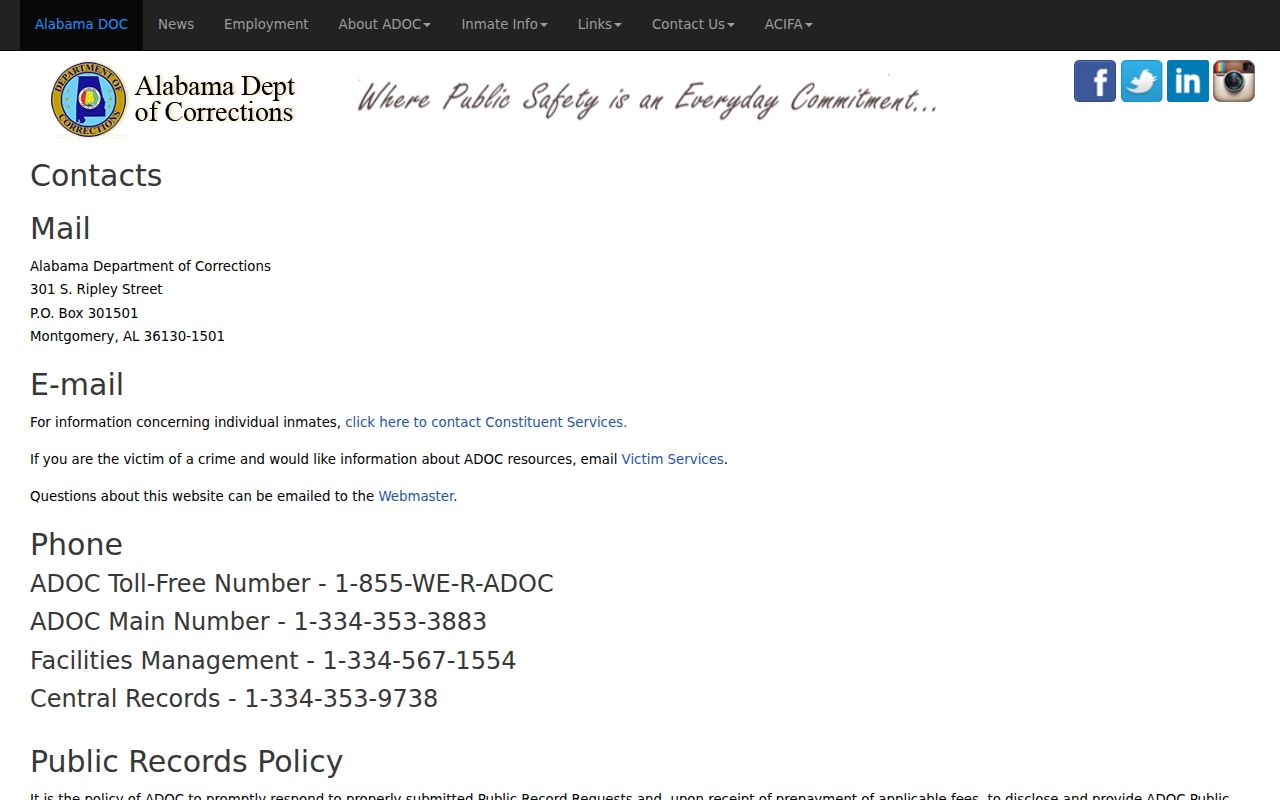
ADOC custody data does not replace the St. Clair County booking record or the Circuit Clerk's charge file.
Using St. Clair County Arrest Records
Public records can help verify a specific case, but names can be shared and early charges can change. Confirm identity, court, dates, current status, and disposition through the official holder. Employment, housing, insurance, credit, and other regulated decisions require a lawful consumer-reporting process rather than a casual public lookup.
Important: This privately operated resource is not an FCRA-regulated consumer reporting agency and cannot supply reports for regulated decisions.
Restricted St. Clair County Charge Records
Juvenile court records are confidential under Alabama law. Sealed and expunged charges, protected personal identifiers, sensitive investigation details, and some warrant material are also withheld. A dismissed charge may remain in the ordinary case history unless it is sealed or expunged under proper authority. The Circuit Clerk can provide records but cannot give legal advice about eligibility.
The Sheriff's Office, led by Billy Murray, controls local arrest and booking records. The official sheriff biography page identifies the office responsible for those law-enforcement channels.
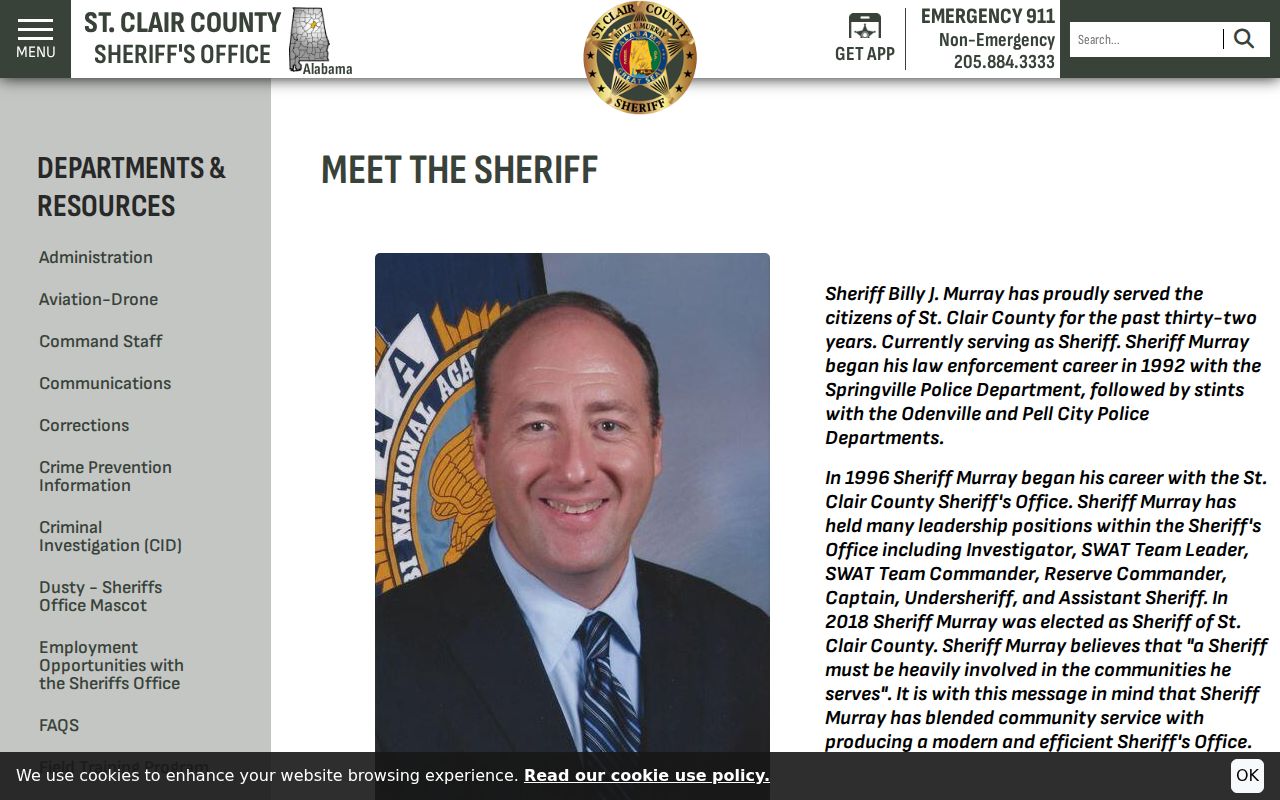
Custody questions go to the Sheriff's Office, while formal court-charge copies go to the Circuit Clerk.
Sex-offender registration is another distinct record channel. The Sheriff's sex-offender information page describes local registration services.
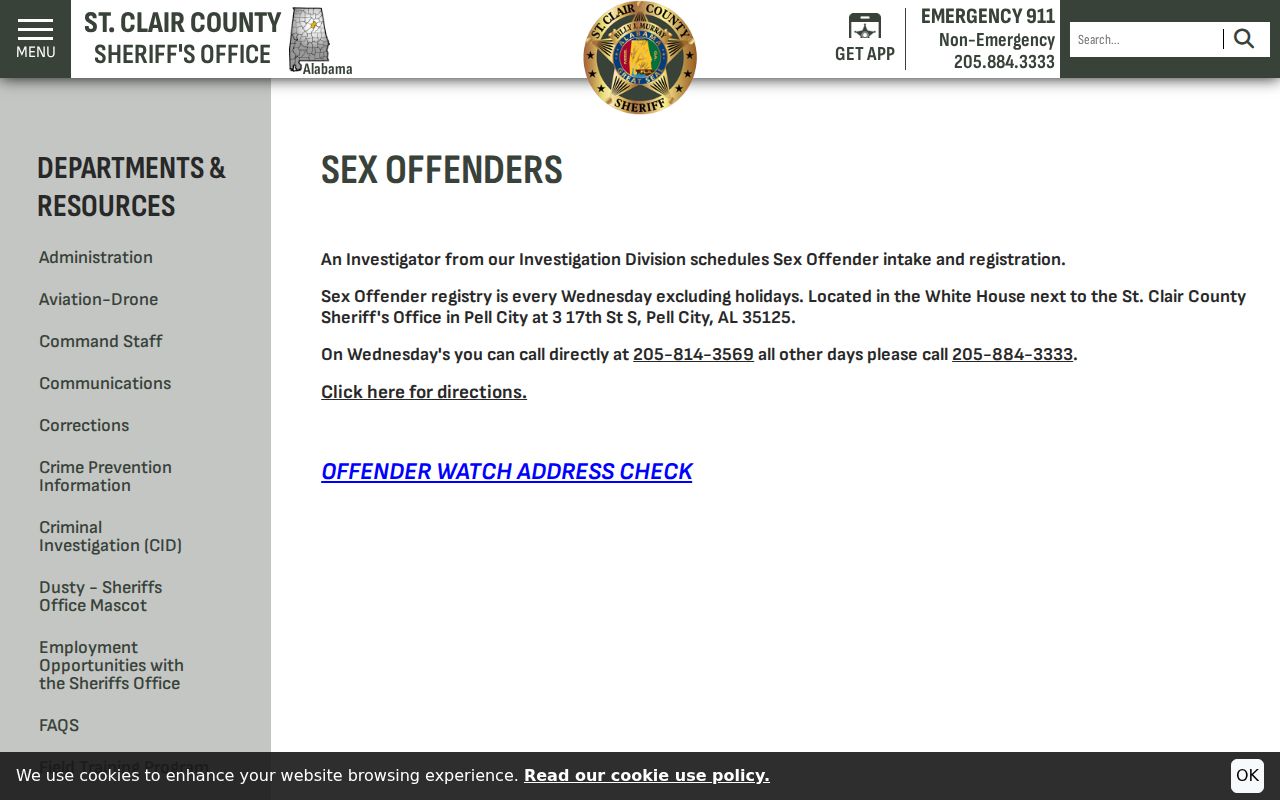
Registration status should not be inferred from a court charge search because registry rules and public dissemination limits are separate.
ALEA's official registry information explains the statewide channel and its limits.
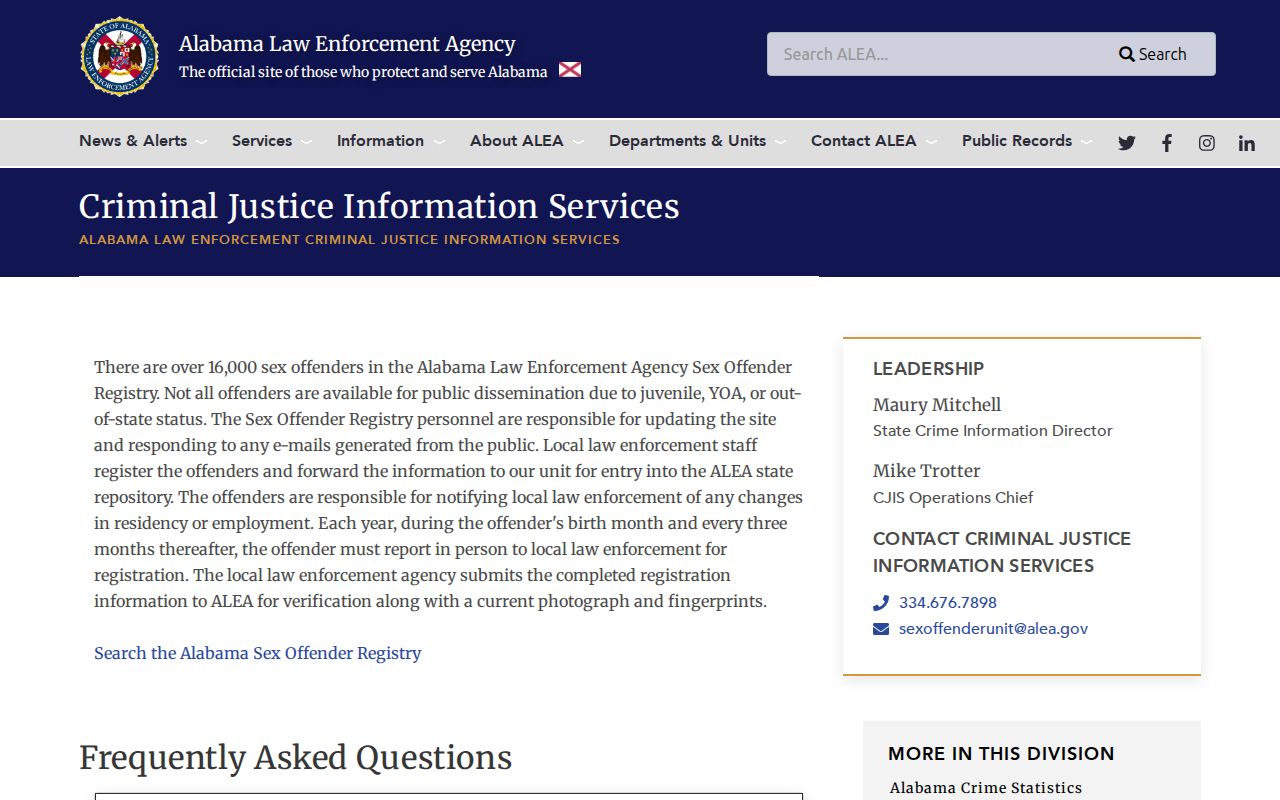
The state notes that juvenile, Youthful Offender, or out-of-state status can limit public dissemination.
ALEA's public information screen supplies additional official context for the registry.
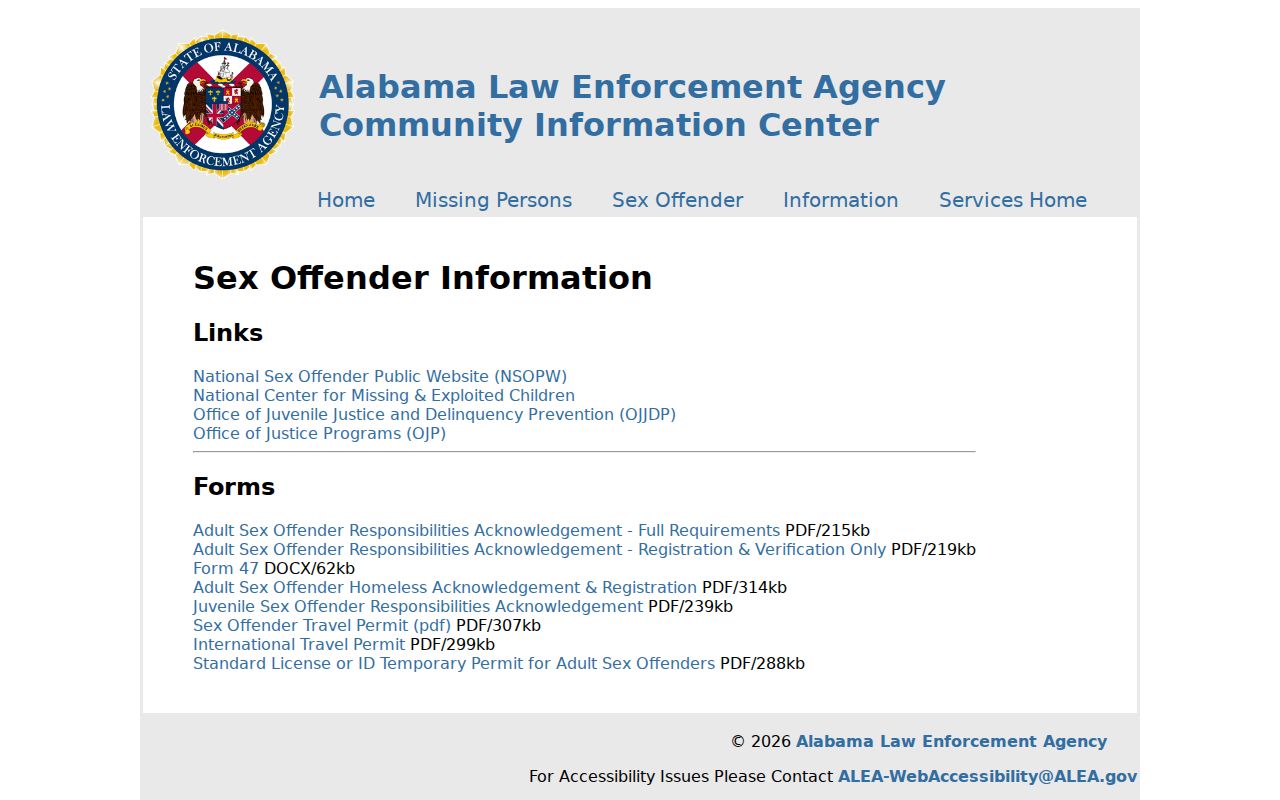
That registry is not a substitute for the arrest record, court charge file, or criminal-case disposition.
Warrants are also a separate access path. The Circuit Clerk lists a Warrants division, while the Sheriff's Most Wanted page contains selected public wanted-person postings rather than every active warrant. Municipal bench warrants may remain with the issuing city court. A charge search therefore should not be treated as a comprehensive warrant check, and sealed warrant material may not be disclosed before service.
Sheriff Billy Murray's office holds the arrest and booking side. Circuit Clerk Kathryn Burke keeps the court side for Circuit and District Court cases. The St. Clair County court site identifies the courthouse and court access routes. Keeping those custodians separate prevents a sheriff request from being mistaken for a certified court-charge record.
For a missing charge document, call the Circuit Clerk at 205-594-2184 in Ashville or 205-338-2511 in Pell City. Ask which office holds the case and whether the filing is imaged, stored, or available as a certified copy before traveling.