
St. Clair County Criminal Court Records
The St. Clair County Circuit Clerk is official record keeper for Circuit and District Court proceedings. The criminal division maintains the case-level record: complaint, indictment or information, warrant or capias entries, arraignment, plea, motions, orders, hearing dates, bond, disposition, sentence, costs, and probation-related events. That file differs from an arrest report. An arrest records what law enforcement did; the court file records what happened to each formal charge.
Felony cases route to Circuit Court. District Court handles many misdemeanor cases and preliminary criminal matters, while municipal courts can hold city-ordinance cases and municipal misdemeanors. The local jury information defines a felony as punishable by at least one year and one day in the penitentiary; a misdemeanor may carry up to one year in county jail, a fine, or both. The court shown on the record controls where to seek the file.
Search St. Clair County Criminal Records
Alacourt ACCESS, also known as Just One Look, provides paid statewide Alabama trial-court record access. It supports name and case-number searches and reports case status, setting dates, parties, court actions, rulings, financial history, and a detailed case action summary. A name or case-number search costs $9.99, even when no match is found. Use an exact case number if possible.
- Confirm the case is in St. Clair County Circuit or District Court rather than Municipal Court or federal court.
- Search by defendant name or exact case number, then match the court and filing date.
- Read every charge separately and compare its current status with the original filing.
- Review the case action summary, plea, disposition, sentence, setting dates, and financial history.
- Request certified or non-imaged material from the Circuit Clerk in Ashville or Pell City.
Online case access does not replace the clerk. Call 205-594-2184 for Ashville or 205-338-2511 for Pell City to confirm the file location, copy availability, and certification charge. Court records are also distinct from an ALEA criminal-history product. No general public statewide criminal-history lookup was identified in official sources, so Alacourt and the Circuit Clerk are the supported case channels.
St. Clair County Criminal Case Stages
A criminal case record grows as each stage occurs. The filed charge starts the court matter. Arraignment records advisement and the defendant's plea. Pretrial entries can include motions, discovery-related orders, continuances, and hearings. A negotiated plea or trial determines the route to disposition. Sentencing follows a conviction and can include incarceration, probation, fines, costs, or other orders recorded by the court.
Case flow: Charges Filed › Arraignment › Pretrial / Motions › Plea or Trial › Disposition › Sentencing
- Charges filed: A complaint, information, or grand-jury indictment states the formal accusation.
- Arraignment: The defendant is advised and enters a plea such as guilty or not guilty.
- Pretrial and motions: Parties file requests and the judge enters rulings, settings, and continuances.
- Plea or trial: The case resolves by plea or proceeds for a fact finder to decide guilt.
- Disposition: Each charge receives an outcome such as guilty, not guilty, dismissed, or another recorded result.
- Sentencing: The judge orders punishment and other terms after a conviction.
What St. Clair County Criminal Records Show
Read the record from identity to outcome. Match the defendant and case number first. Then compare each charge with its plea and disposition. The case action summary supplies the dated history, while the sentence states punishment only after a conviction. Bond is a release and appearance condition, not proof of guilt. Document images may be sold separately through Alacourt when available.
| Field | What It Shows |
|---|---|
| Case Number | The court-assigned identifier for the criminal proceeding. |
| Defendant and Court | The accused person and whether Circuit, District, or another court holds the case. |
| Charges | The formal accusation by count, which may change during prosecution. |
| Arraignment and Plea | The formal appearance and the defendant's answer to each charge. |
| Case Action Summary | Dated motions, orders, hearings, settings, continuances, and rulings. |
| Bond | Release and appearance terms shown in the court record where applicable. |
| Disposition | The final outcome of each charge or the case. |
| Sentence | Punishment and court-ordered terms imposed after conviction. |
| Financial History | Fines, costs, and other court financial entries reported through Alacourt. |
St. Clair County Charges vs. Convictions
A charge is an accusation, not a finding of guilt. A St. Clair County criminal court record may retain the history of a charge that was amended, dismissed, or resolved by a not-guilty finding. The disposition must be read for each count. For a closer view of booking accusations and the prosecutor's formal charging decision, use the St. Clair County arrest records and court charges resource.
| Charge | Conviction | |
|---|---|---|
| Stage | Accusation | Verdict or plea |
| Burden of Proof | Probable cause | Beyond reasonable doubt |
| Meaning | An allegation filed for court action | A guilty plea or guilty finding |
| Record Check | Read charge status and later amendments | Read disposition and sentence |
Read St. Clair County Case Outcomes
Disposition means the final outcome of a charge or case. “Guilty” may follow a plea or trial finding. “Not guilty” means the fact finder did not convict. “Dismissed” means the charge ended without conviction on that count. A nolle prosequi indicates that prosecution was discontinued. Do not assume the meaning of an unexplained code; ask the Circuit Clerk for the recorded term or document.
Sentence means the punishment ordered after conviction. Read incarceration, probation, fines, costs, and related orders together. Financial entries may continue after disposition. A later probation action is part of the case history but does not change the need to identify the original conviction and sentence.
St. Clair County Sealed Records
Sealing and expungement both limit ordinary public access, but they are not interchangeable. Alabama's expungement chapter controls eligibility for qualifying criminal records. A person generally needs accurate arrest, charge, and disposition details, files a petition in the appropriate circuit court, serves required parties, and may face a hearing if opposed. The Circuit Clerk cannot advise whether a case qualifies.
The official Alabama expungement source provides the governing statutory path.
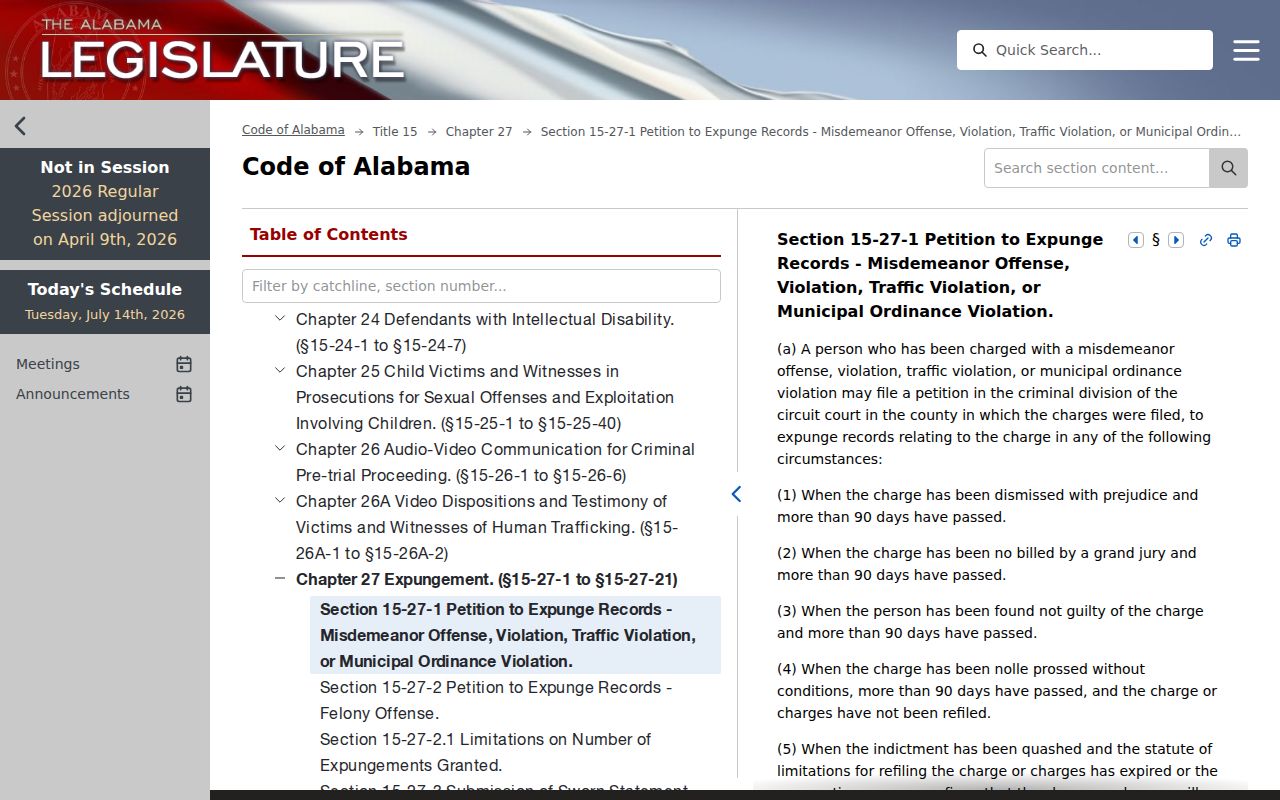
A granted order removes the covered record from ordinary access, but expungement is not a pardon and does not erase every private copy or memory.
| Sealed | Expunged | |
|---|---|---|
| Visibility | Closed to ordinary public view by authority or order | Covered qualifying record removed from ordinary public access after an order |
| Access | Requires authorization or a court order | Controlled by Alabama law and the expungement order |
| Eligibility | Depends on the law and case-specific order | Fact-specific under Alabama Code Section 15-27-1 et seq. |
Public St. Clair County Criminal Records
The St. Clair County Courthouse and Pell City court offices serve the same local trial-court system, so the case notice or Circuit Clerk should control which counter receives a copy request.
Alabama Code Section 36-12-40 provides Alabama residents a right to inspect public writings unless another law makes the material confidential. Criminal court access runs through Alacourt and the Circuit Clerk. It does not make juvenile, sealed, expunged, or otherwise protected records public.
Key Statutes:
Alabama Code Section 15-27-1 et seq. controls which qualifying criminal records may be expunged.
Alabama Code Section 12-15-133 treats juvenile court records as confidential.
The official juvenile confidentiality statute shows why youth records do not appear like ordinary adult criminal files.
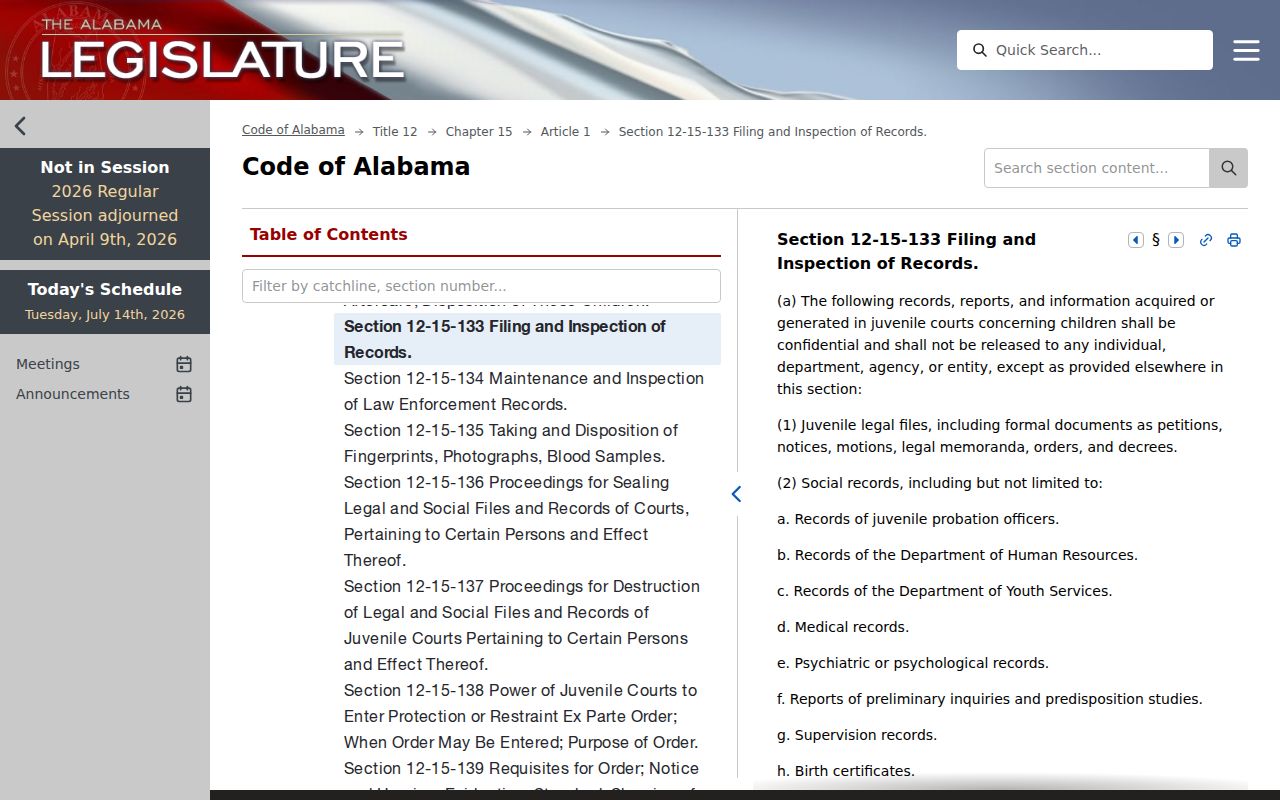
Access belongs only to the court, parties, agencies, and other people authorized by law or court order.
St. Clair County Criminal Record Use
A court search is useful for checking a public case, but it should not be treated as a complete criminal-history report. Similar names, amended charges, later dispositions, and expungement orders can change the meaning. Employment, housing, credit, insurance, and other regulated decisions require a compliant consumer-reporting process and applicable notices. Always verify a result against the official case file.
Important: This privately operated resource is not an FCRA-regulated consumer reporting agency and cannot supply reports for regulated decisions.
Restricted St. Clair County Criminal Records
Juvenile files, sealed or expunged cases, protected personal identifiers, and some sensitive law-enforcement information are withheld from ordinary access. A lack of online data is not proof that a record never existed. Ask the Circuit Clerk whether the case number belongs to a restricted, non-imaged, older, or different-court file. Authorized access may require a court order.
The prosecutor and court are separate offices. Lyle Harmon's St. Clair County District Attorney's Office decides how charges proceed and presents cases, while the Circuit Clerk keeps the court record.
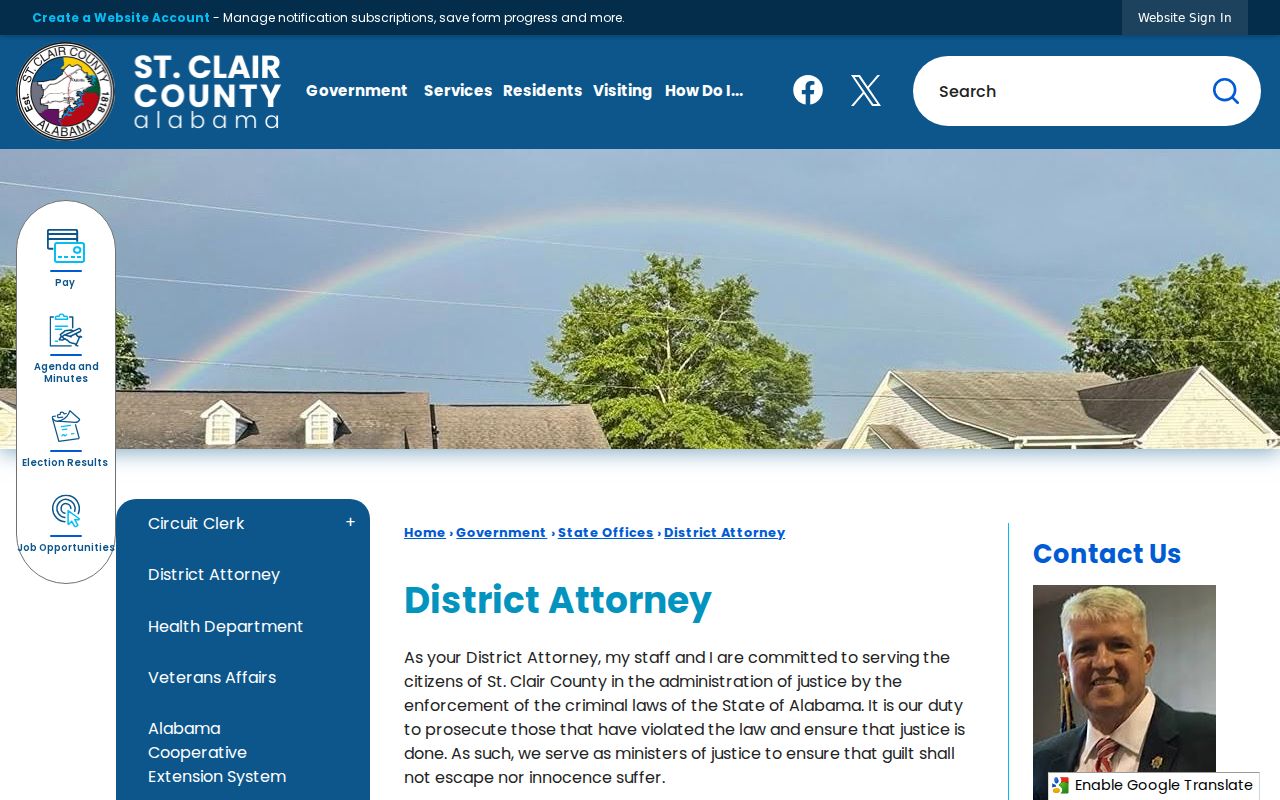
The official county page identifies the Pell City prosecution office and distinguishes that role from the clerk's record custody.
The county District Attorney directory lists the office and staff contact path.
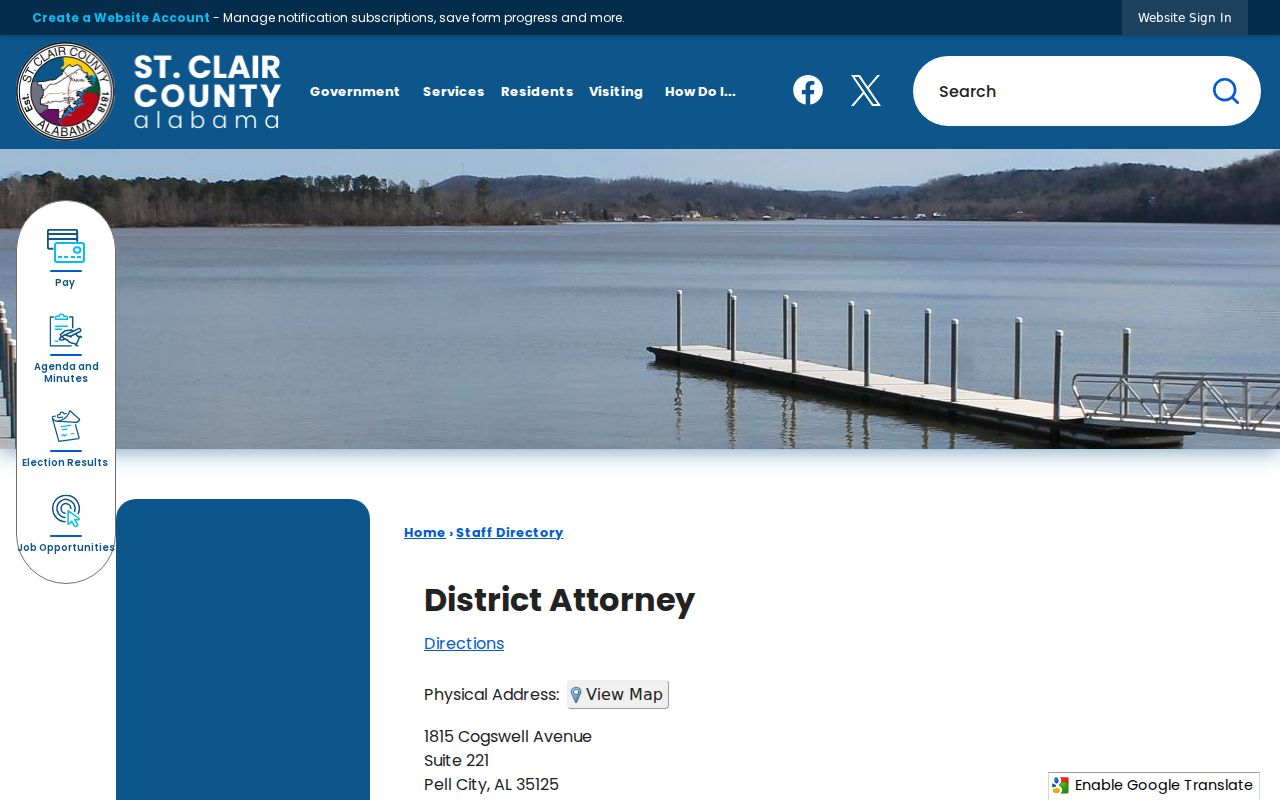
Questions about certified case documents still go to the Circuit Clerk, while prosecution and victim issues go to the District Attorney.
The District Attorney's Victim Services Unit provides direct help to victims navigating the criminal process.
Victim Service Officers assist with the process but do not replace the official court record or the clerk's copy service.
No verified county public defender office was found. Alabama's Office of Indigent Defense Services administers the statewide indigent-defense framework.
A St. Clair County defendant seeking appointed counsel should request it through the court handling the case.
The two Circuit Clerk locations provide the final copy fallback. The Ashville office is at 100 6th Avenue North, Suite 400, Ashville, AL 35953, and publishes 8:00 a.m. to 5:00 p.m. weekday hours. The Pell City office is at 1815 Cogswell Avenue, Suite 217, Pell City, AL 35125, with the same published weekday hours. Call first so staff can confirm the case location, whether the document is imaged or stored, and any plain-copy or certification cost.
Bond entries require the same careful reading as charges. The sheriff roster may show a bond at booking, while the court file can hold later bond actions. St. Clair County property bonds are handled through Sheriff's Office locations in Ashville or Pell City. The corrections page also identifies a $35 bond transmittal fee paid in cash to the Circuit Clerk. A bond amount or release does not state the disposition and should never be read as a conviction.
Circuit Clerk Kathryn Burke is the court-record custodian. Sheriff Billy Murray's office controls booking and jail sources, while District Attorney Lyle Harmon's office prosecutes cases. Those roles can touch the same event but produce separate records. The St. Clair County court site supplies the official local courthouse and clerk route.