
St. Clair County Circuit Court
The St. Clair County Courthouse court site identifies the local Thirtieth Circuit. Circuit Clerk Kathryn Burke keeps its trial-court records, while Sheriff Billy Murray maintains separate jail and law-enforcement records.
The local court site identifies St. Clair County as the Thirtieth Circuit Court of Alabama. Circuit Court is the general-jurisdiction trial court. It hears felony criminal cases, larger civil disputes, domestic relations matters, and appeals that come from lower courts. Its record can contain pleadings, indictment or complaint material, motions, notices, settings, orders, judgments, dispositions, sentences, and financial history. The Circuit Clerk maintains these records and also keeps District Court files.
St. Clair County uses both Ashville and Pell City for public court operations. The main AOC courthouse address is 100 6th Avenue North, Suite 400, Ashville, with the clerk at 205-594-2184. The Pell City Circuit Clerk is at 1815 Cogswell Avenue, Suite 217, with phone 205-338-2511. Office hours published for both are Monday through Friday, 8:00 a.m. to 5:00 p.m. A summons, notice, or clerk response should control which location a visitor uses.
St. Clair Court Judges
The official local judge pages identify two Circuit judges and two District judges. All four published judicial offices are in the Pell City county courthouse building, though the court system also operates in Ashville. The table uses the official titles, addresses, and phone numbers. A judge's office number is not a substitute for filing with the Circuit Clerk.
| Court / judge | Type | Address | Phone |
|---|---|---|---|
| Hon. Billy R. Weathington Jr. | Presiding Circuit Judge | 1815 Cogswell Ave., Suite 307, Pell City, AL 35125 | 205-338-9491 |
| Hon. James E. Hill III | Circuit Judge | 1815 Cogswell Ave., Suite 217, Pell City, AL 35125 | 205-594-2581 |
| Hon. Brandi Hufford | District Judge | 1815 Cogswell Ave., Suite 308, Pell City, AL 35125 | 205-338-3869 |
| Hon. Robert Minor | District Judge | 1815 Cogswell Ave., Suite 208, Pell City, AL 35125 | 205-338-1034 |
Probate Judge Andrew Weathington is a separate county official. Probate Court records do not become Circuit Court records merely because both offices are part of local government.
The civil amount categories help users distinguish Circuit and District Court. St. Clair County publishes small-claims filing bands through $6,000 and district civil cases from $6,000.01 through $20,000. Circuit civil categories begin above $20,000 in the local fee sheet. Circuit Court also hears domestic relations matters. Jurisdiction depends on the claim and governing law, so the published fee category is a practical sorting clue, not legal advice about where a disputed case must be filed.
St. Clair Court Types Compared
Alabama does not use the County Court and Justice of the Peace structure assumed by the generic template. St. Clair County's relevant comparison is Circuit Court, District Court, Municipal Court, and Probate Court. Choosing the wrong level can cause a missed record because not every local case appears under the same court or office.
| Point | Circuit Court | District Court | Municipal / Probate |
|---|---|---|---|
| Main role | General-jurisdiction trial court | Limited-jurisdiction trial court | Defined city or probate matters |
| Civil work | Circuit civil above $20,000 and related matters | Small claims through $6,000; district civil $6,000.01-$20,000 | Municipal is not the general civil court; Probate handles estates and protected proceedings |
| Criminal work | Felonies and related proceedings | Many misdemeanors, preliminary matters, and state traffic cases | Municipal ordinance and municipal traffic cases; Probate is not the general criminal court |
| Record keeper | Circuit Clerk | Circuit Clerk | Municipal clerk or St. Clair Probate Office |
St. Clair Circuit Case Flow
A criminal case may start with an arrest, complaint, or warrant. Felony evidence may go before an 18-member grand jury, which decides whether enough evidence exists to return an indictment and require trial. The Circuit Court record then tracks arraignment, pleas, motions, settings, trial or plea, disposition, sentencing, and any appeal. A charge is not a conviction. The disposition and sentence fields reveal the actual outcome.
Criminal flow: Arrest or Charge › First Appearance › Grand Jury or Charging Step › Arraignment › Pretrial › Plea or Trial › Disposition › Sentencing › Appeal
A civil case begins when a complaint or petition is filed and served. The opposing side may answer, and the parties may file motions or exchange information. A court order, settlement, dismissal, or trial judgment resolves the matter. Collection activity such as garnishment or execution can then appear in the file.
Civil flow: Complaint or Petition › Service › Answer › Motions and Discovery › Hearing or Trial › Judgment › Enforcement or Appeal
Jury records add context to that flow. The local jury page defines a civil case as a dispute between parties and a criminal case as an action brought by the state against a person or corporation accused of breaking the law. It describes a felony as punishable by at least one year and one day in the penitentiary and explains the grand jury's charging role. Those definitions help readers avoid confusing a civil judgment with a criminal disposition.
St. Clair Circuit Divisions
The Circuit Clerk describes ten record divisions and names Civil, Criminal, Domestic, Child Support, Traffic, Juvenile, and Warrants among them. Civil records include complaints, answers, service returns, motions, judgments, garnishments, and satisfaction or release papers. Domestic relations files can include divorce, custody, support, contempt, modifications, and protection-from-abuse matters. Criminal files can include charging papers, arraignment, pleas, motions, orders, bond entries, disposition, sentencing, and financial obligations.
Access changes with the case type. Juvenile records are confidential under Alabama law. Sealed or expunged criminal records do not remain available through an ordinary public search. Personal identifiers may be redacted. Users who need a public case can search Alacourt ACCESS by name or case number, then contact the Circuit Clerk for certified, old, or non-imaged documents. The contextual St. Clair County court records resource explains the paid search fields in more detail.
Thirtieth Judicial Circuit
St. Clair County forms Alabama's Thirtieth Judicial Circuit. Alabama appellate courts review trial-court rulings for legal or procedural error based on the trial record; they do not retry the case with new witnesses or a new jury. Civil and criminal appeals follow their appropriate Alabama appellate channels, with the Supreme Court of Alabama as the state's highest court. The Alabama Judicial System links statewide trial, appellate, e-filing, and case-access resources.
The trial record matters on appeal because appellate judges work from the evidence, exhibits, rulings, and objections preserved below. A notice of appeal does not turn the appellate court into a second trial court. Users seeking an appellate filing should use Alabama's appellate public portal, while the St. Clair County Circuit Clerk remains the source for the local trial-court record and certified documents in its custody.
Federal jurisdiction is separate. The U.S. District Court for the Northern District of Alabama handles qualifying federal cases, not ordinary St. Clair County Circuit Court matters. Its official homepage is captured below.
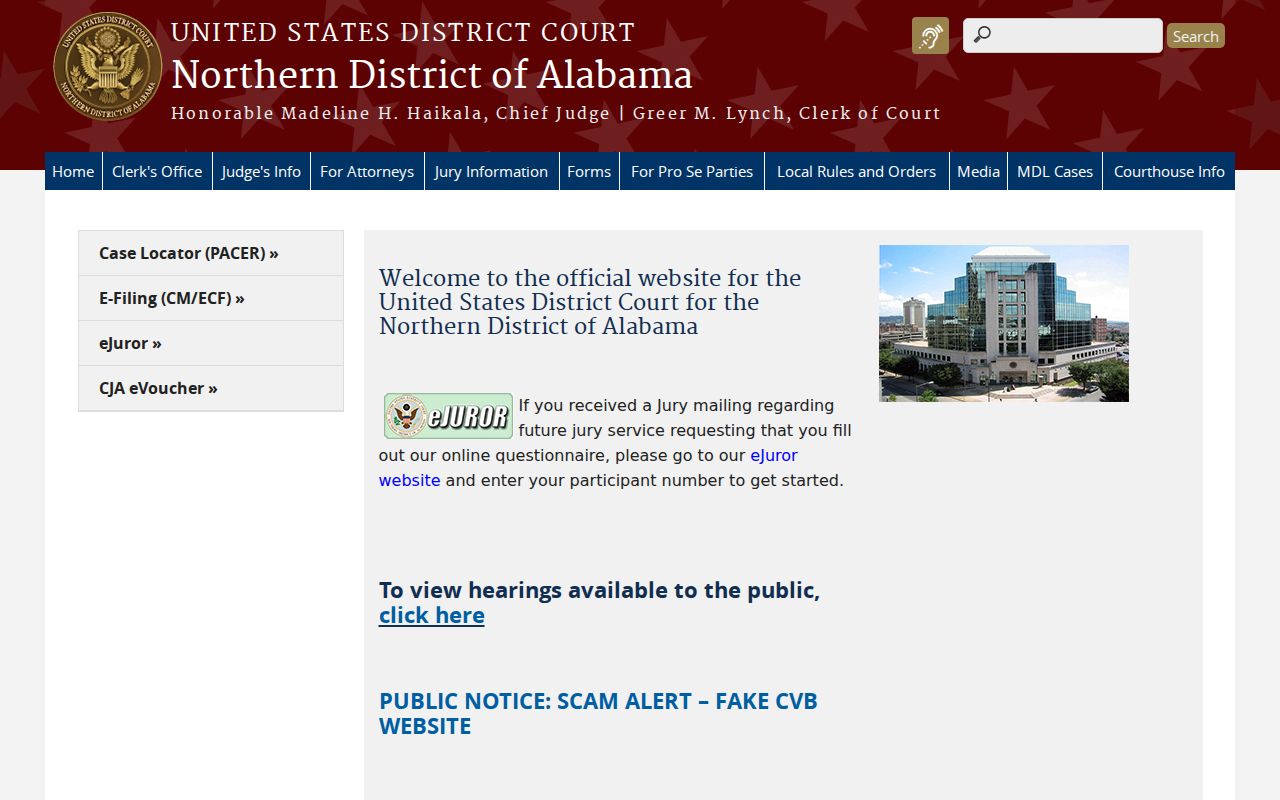
A state case number should be taken to the Circuit Clerk or Alacourt, while a federal case uses the Northern District and PACER channels.
Lower St. Clair Courts
District Court handles lower-value civil matters, small claims, many misdemeanors and preliminary criminal steps, and state traffic citations. The St. Clair traffic page states that its citations are set in District Court. A ticket date is not a trial date. A person who wants to plead not guilty must appear on the court date and request a trial. Municipal courts handle city ordinance and municipal traffic cases, so a city ticket or municipal bench warrant may require the issuing city's court rather than the county Circuit Clerk.
Probate Court handles wills, estates, guardianships, conservatorships, and recorded Alabama marriage certificates. Its offices are led by the Probate Judge and are distinct from the Circuit Clerk. This lower-court structure determines where a record can be found and which court receives the next step if an appeal is authorized.
Federal court location details come from the Northern District court-locations page. The image below shows the official location channel, including the Birmingham courthouse used for federal court business.
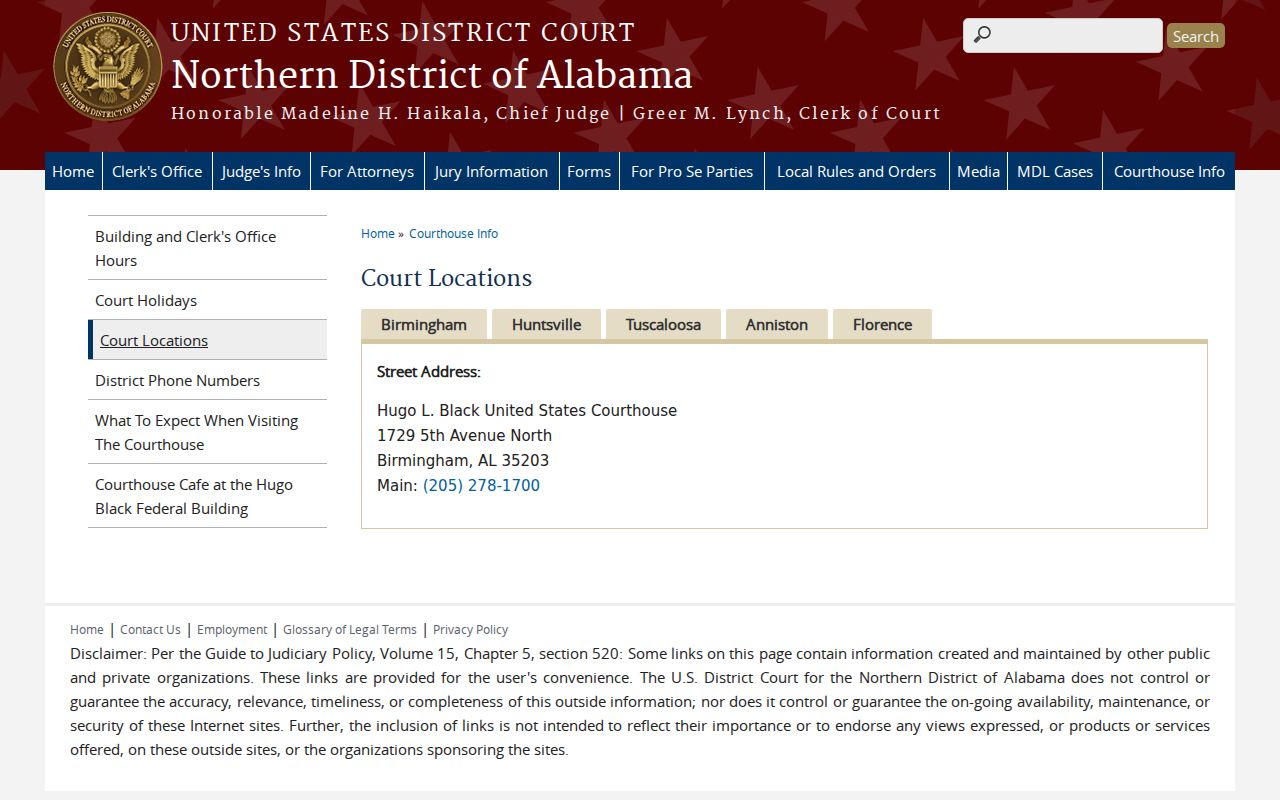
The federal courthouse at 1729 5th Avenue North in Birmingham is not a St. Clair County Circuit Court branch.
Federal dockets and filings are accessed through PACER and CM/ECF for ALNDC. Its official lookup view is shown here.
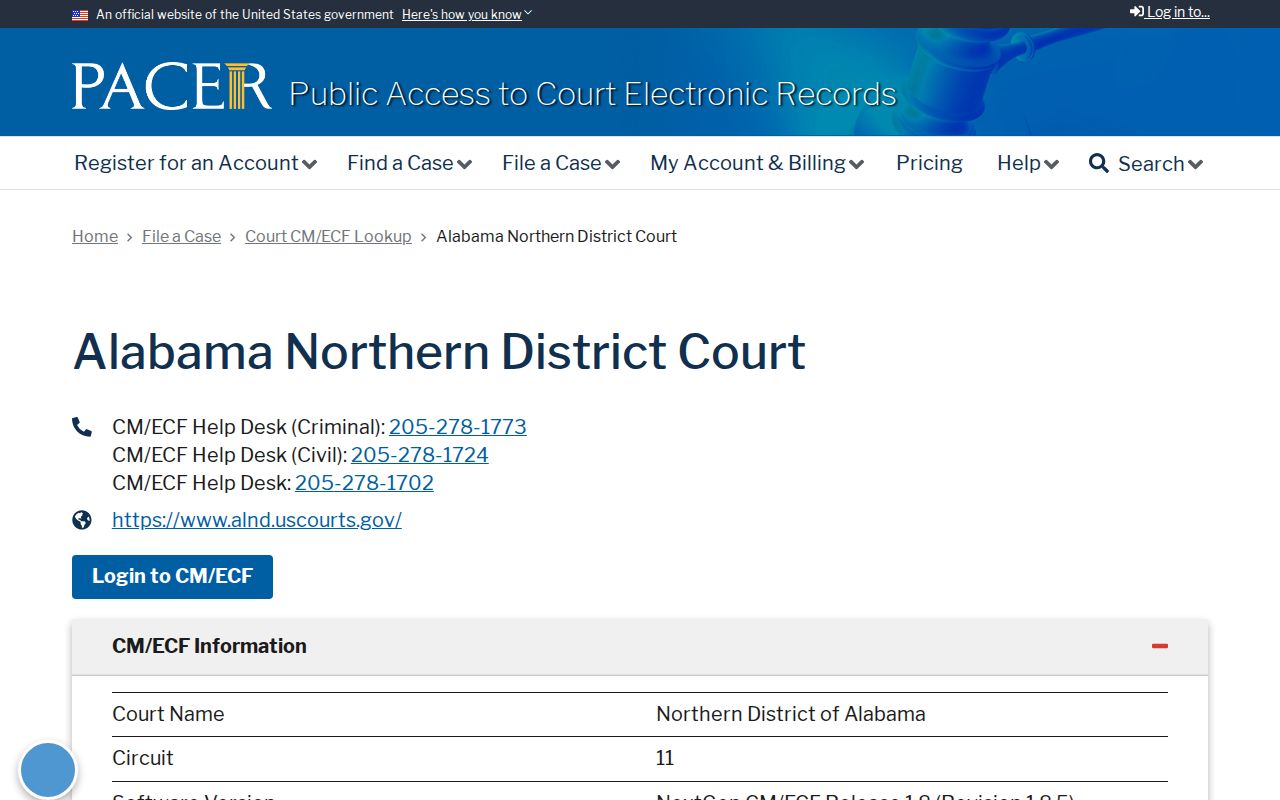
PACER is account-based federal access and does not replace Alacourt for state Circuit Court records.
Bankruptcy records use the U.S. Bankruptcy Court for the Northern District of Alabama, another separate court system.
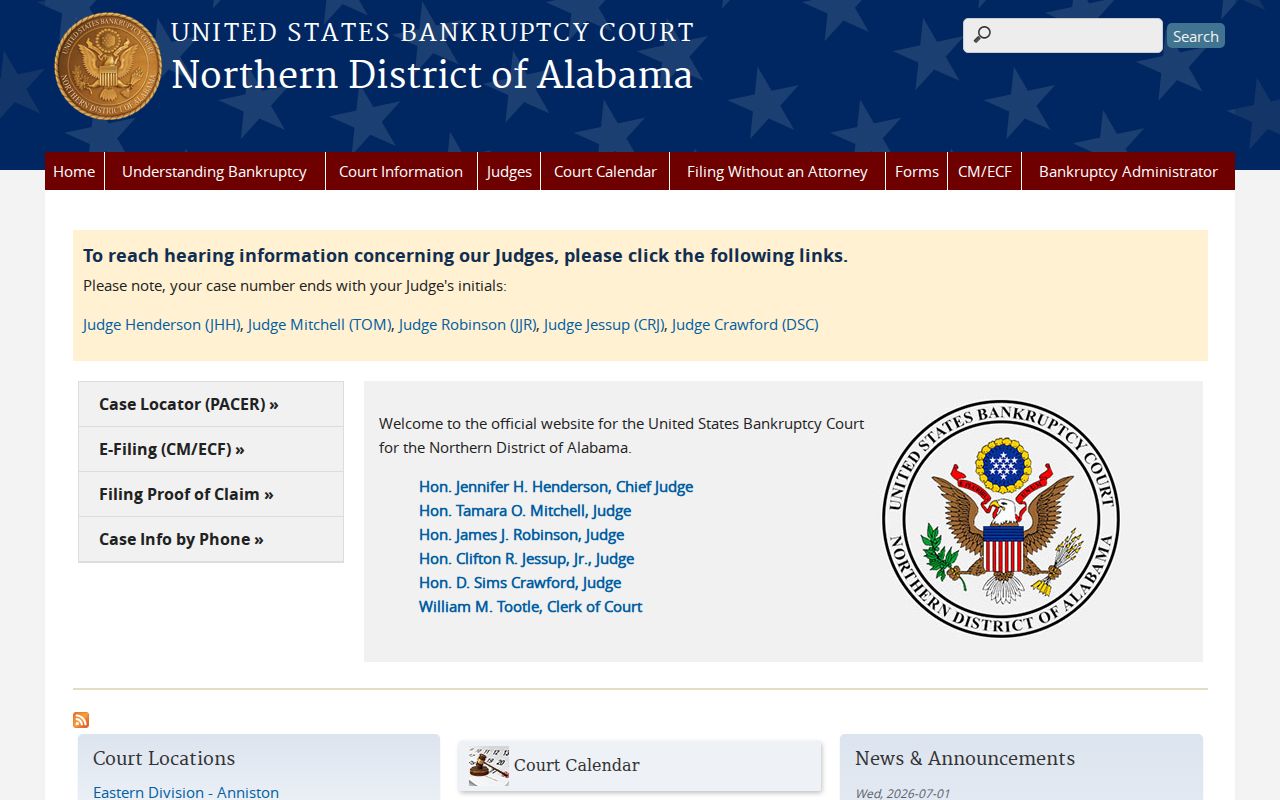
A bankruptcy filing will not appear merely by searching the St. Clair County Circuit Court case file.
The U.S. Attorney's Office for the Northern District of Alabama prosecutes federal criminal matters, while state prosecutions in St. Clair County involve the county District Attorney.
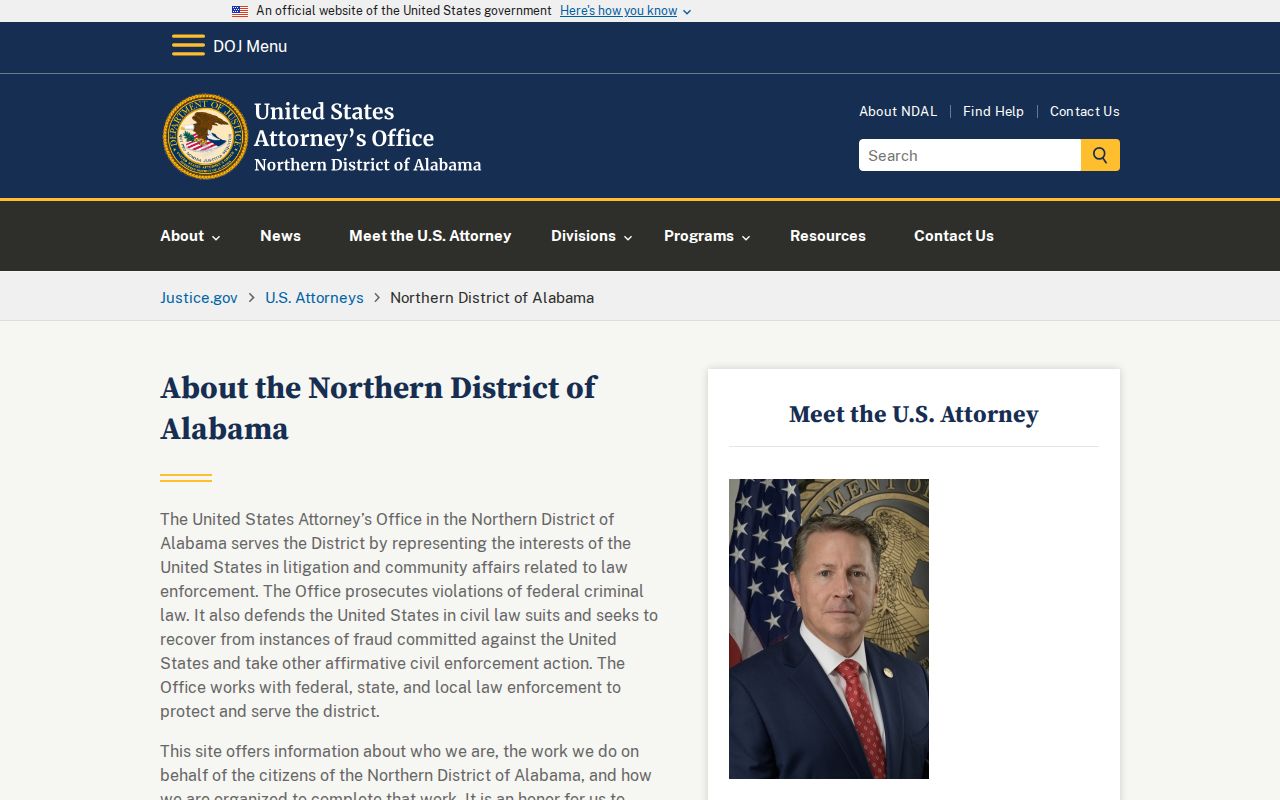
The prosecuting office is not the court record keeper; use the clerk for the court file.